Electrosmog – The Invisible Threat to Our Health

When Thomas Edison first lit a light bulb in 1879, a new technological era began. Electric power fundamentally transformed human life and became the foundation of our modern civilisation. Today, more than 130 years later, daily life without electrical energy, digital devices, and wireless communication is almost unimaginable.
However, this technological progress has a scarcely visible but steadily growing side effect: electrosmog. This term refers to the pervasive exposure to electromagnetic fields generated by electrical devices, power lines, and wireless applications. Estimates suggest that exposure to electromagnetic radiation today is 100 to 200 million times higher than it was around a century ago. Contributing factors include radio and television transmitters, mobile networks, Wi-Fi, Bluetooth, cordless phones, and an ever-increasing number of household electrical devices. Antennas and wireless sources are nearly ubiquitous, leaving very few places free from pulsed, high-frequency radiation.
Increasingly, experts are of the view that electrosmog can influence biological processes. The body’s natural regulatory mechanisms come under continuous stress, which can promote both physical and psychological strain. Consequently, electrosmog is increasingly regarded as a serious health and environmental issue in modern industrialised societies.
What Is Electrosmog
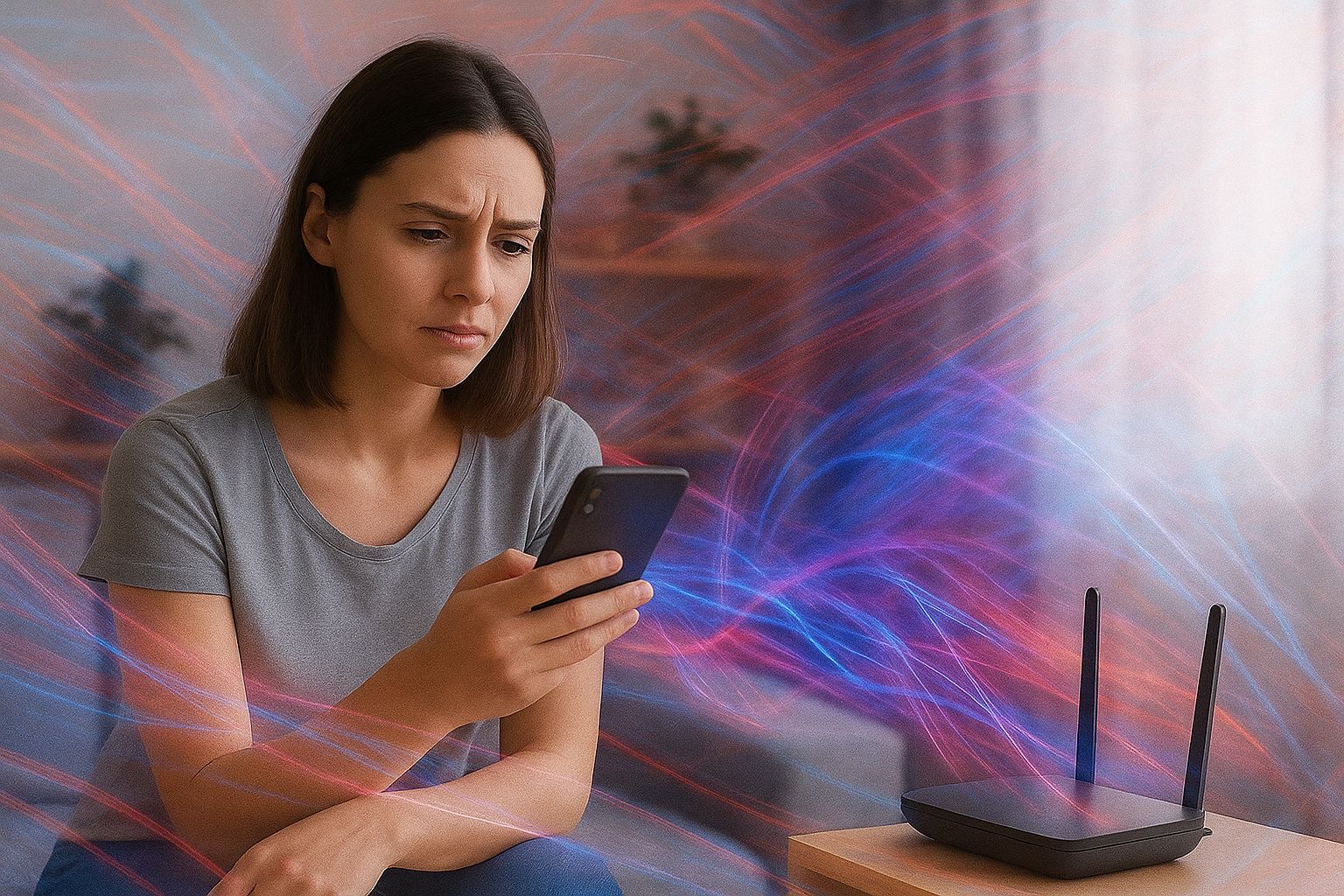
Electrosmog is the colloquial term for the totality of non-ionising radiation produced by electrical and electronic technologies. This type of radiation exists wherever electric current flows or voltage is present. It is often overlooked that an electric field forms as soon as a device is plugged into a socket – even if it is switched off. Typical sources of non-ionising radiation include high-voltage lines and transformers, mobile phone masts, antennas, Wi-Fi routers, and TV and radio transmitters, as well as household appliances, computers, screens, lamps, mobile phones, tablets, and cordless phones.
While the harmful effects of strong non-ionising radiation are scientifically established, recent studies increasingly show biological effects at much lower intensities, sometimes even below established safety limits.
Low-Frequency and High-Frequency Radiation
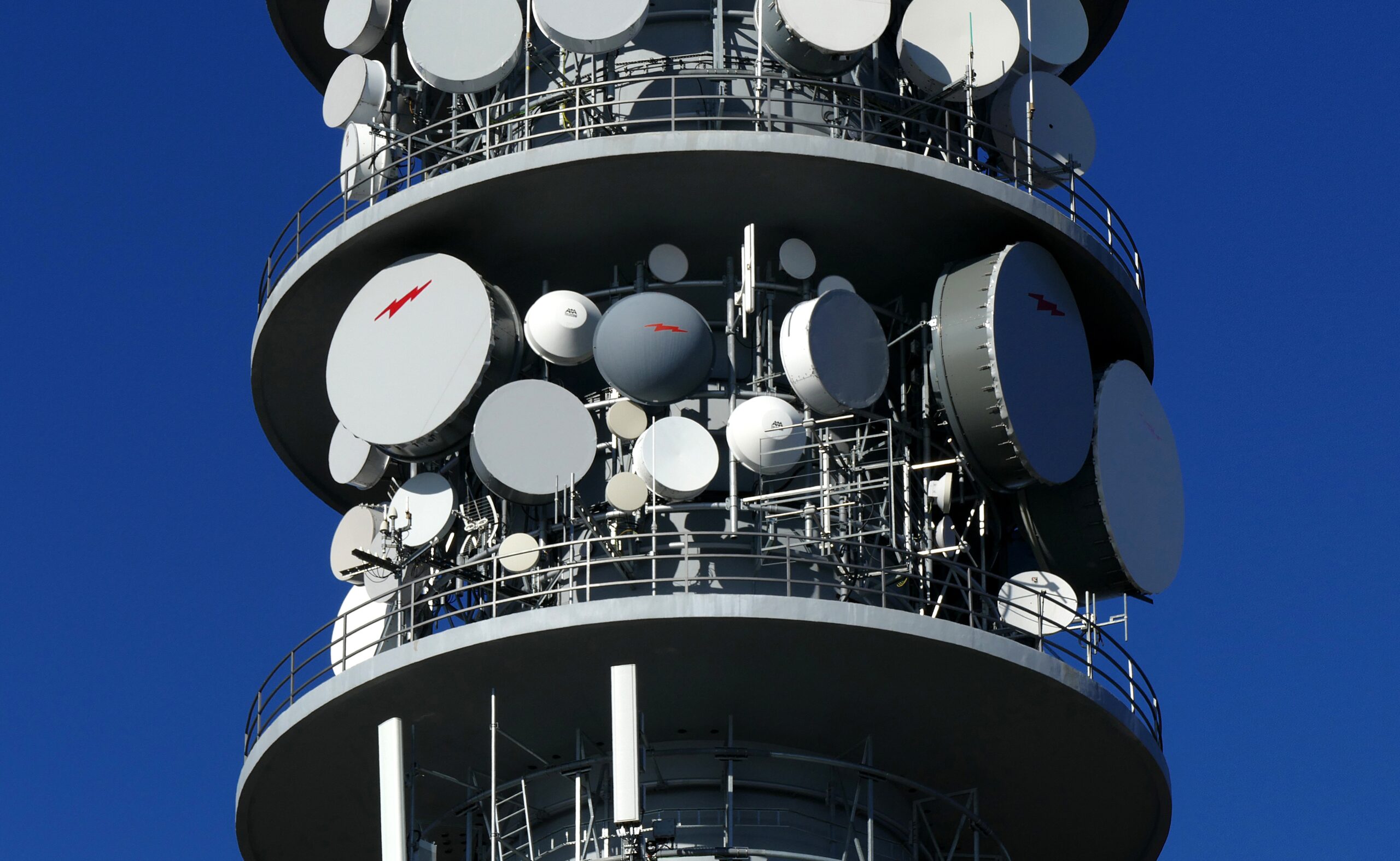
Non-ionising radiation can be divided into low-frequency and high-frequency fields. Low-frequency fields mainly arise from power lines, rail and high-voltage lines, and household electrical appliances. In Europe, the mains frequency is 50 hertz, which means these fields are continuously present, particularly in living and sleeping areas.
High-frequency radiation, on the other hand, is primarily used for wireless information transfer, for example via mobile networks, Wi-Fi, Bluetooth, or broadcasting. This type of radiation is considered particularly critical because it is intentionally transmitted and is usually pulsed, timed, and modulated. Studies indicate that this combination of frequency, pulsing, and duration of exposure can significantly affect biological systems.
Ionising Radiation for Comparison

For better understanding, ionising radiation is often used as a reference. X-rays and gamma rays carry enough energy to remove electrons from atoms, which can directly damage or genetically alter cells. Although electrosmog does not belong to this type of radiation, research shows that even non-ionising radiation can disrupt biological processes and exert long-term stress on the body.
Is Electrosmog a Health Risk
The health effects of electrosmog are diverse. Non-ionising radiation has been shown to heat human tissue and influence the function of nerve and muscle cells through induced electrical currents. These acute effects occur at certain intensity levels, which is why ICNIRP limits are intended to prevent such outcomes.
However, recent studies and observations indicate that biological changes may also occur below these limits. This includes alterations in cellular metabolism and effects on the nightly release of the hormone melatonin, which plays a central role in sleep, regeneration, and immune function.
Common Symptoms

An increasing number of people report symptoms they associate with electromagnetic fields. Sleep disturbances are among the most frequent, with difficulties falling asleep, waking multiple times at night, or feeling unrefreshed despite sufficient sleep. Chronic sleep deficits can lead to daytime fatigue, reduced concentration, and increased irritability. Headaches and migraines, which may be dull, pressing, or pulsating, can worsen with prolonged exposure. Fluctuating vision, eye flickering, or a feeling of pressure in the head are also reported.
The nervous system appears particularly sensitive. Restlessness, nervousness, heightened stress vulnerability, and diffuse anxiety are common complaints. Individuals also report persistent exhaustion, weakness, and tiredness, sometimes leading to burnout-like conditions or depressive moods. Dizziness and balance disturbances further impact daily life. Cardiovascular issues such as palpitations, irregular heartbeat, chest pressure, or blood pressure fluctuations may occur. Sensory disturbances like tingling, burning, or pins-and-needles sensations in the arms and legs are frequent even without identifiable organic causes. In children, learning difficulties, concentration problems, and increased motor restlessness, sometimes reaching hyperactivity, have been observed. Epidemiological studies also suggest a potential link between electromagnetic fields and leukaemia.
Everyday Sources
Electrosmog is generated both outdoors by mobile phone masts, antennas, and power lines, and indoors by cables, extension leads, Wi-Fi routers, mobile phones, and cordless phones. It is particularly concerning that a mobile phone held to the ear often produces a stronger electric field than a distant mobile phone mast. Many small radiation sources can combine, creating a significant ongoing exposure, especially for electro-sensitive individuals.
Conclusion
Electrosmog is an invisible yet real environmental burden of our time. While current exposure limits are designed to prevent acute damage, scientific evidence and practical experience show that biological effects can occur even at low intensities. A conscious approach to electrosmog, reduction of unnecessary sources, and targeted protective measures can help reduce exposure and improve both physical and mental wellbeing sustainably.